DTG vs Screen Printing: Which Should You Choose?
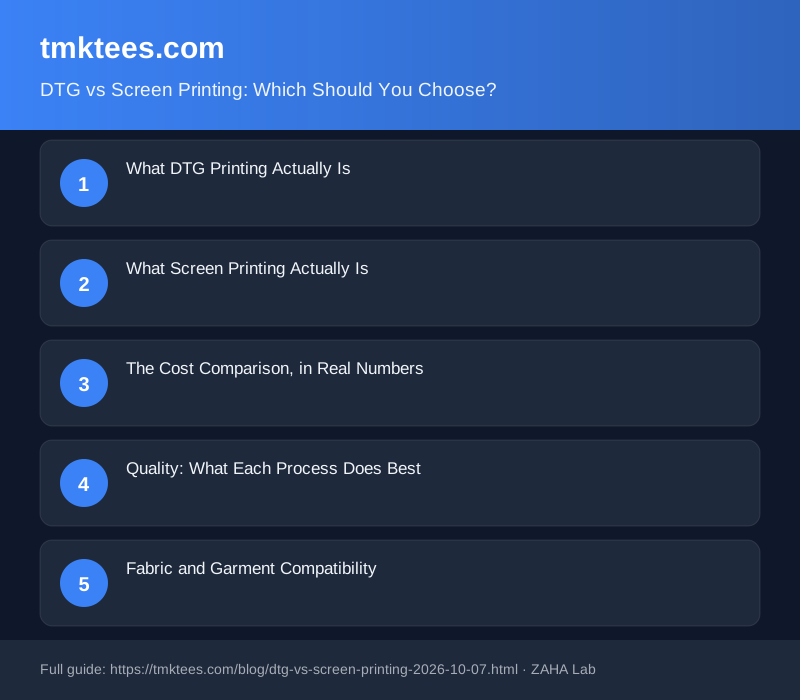
Picking the wrong print method can add 40% to your per-unit cost overnight. The fix is a single rule: orders under 24 pieces go to DTG printing; orders of 25 or more go to screen printing. That rule settles the majority of custom t-shirt and streetwear decisions before you ever speak to a printer.
What DTG Printing Actually Is
Direct-to-garment (DTG) printing works like a wide-format inkjet, except the surface is fabric. A flatbed machine holds the shirt flat while print heads traverse it, depositing water-based inks in fine droplets. It can reproduce a full-colour photograph, a subtle gradient, or detailed illustrated artwork in a single pass. No plates, no screens, no minimum quantity.
Setup cost: zero. Every shirt prints from the same digital file, on demand. A single shirt costs roughly the same per unit as a run of ten. That makes DTG the obvious choice for samples, one-off gifts, and limited drops where you do not yet know which designs will sell.
Fabric is the critical variable. DTG inks bond chemically with natural fibres, so the blank you choose matters. The Gildan Men's Softstyle T-Shirt (100% ring-spun cotton) is the most widely used DTG blank at UK print shops. Its smooth surface holds fine detail cleanly, and quality-cured prints survive 50-plus wash cycles without significant fading. On polyester blends above 50%, colour vibrancy drops and dye migration becomes a real risk over time.
What Screen Printing Actually Is
Screen printing follows a different logic entirely. For each colour in the design, a technician creates a mesh screen coated with light-sensitive emulsion. The design is burned onto it photographically, then plastisol ink is forced through the open mesh with a rubber squeegee. The shirt travels through a conveyor dryer and the ink fuses permanently into the fibre structure.
One colour, one screen. A five-colour logo needs five screens, five setups, and five separate press passes. Setup fees at UK print shops typically run £20 to £45 per screen. A three-colour design carries roughly £60 to £135 in fixed costs before a single shirt is printed. Spread that across 50 shirts: £1.20 to £2.70 of overhead per unit. Spread it across 10 shirts: £6 to £13.50. That arithmetic is the entire reason screen printing rewards volume so strongly.
Once the screens exist, per-unit costs fall sharply. At 100 pieces, screen printing is typically 35 to 50% cheaper per shirt than DTG for the same simple design.
The Cost Comparison, in Real Numbers
These are approximate retail estimates for a front-only, two-colour design on a standard white cotton tee from a UK printer in October 2026:
| Quantity | DTG (approx.) | Screen Print (approx.) |
|---|---|---|
| 1 | £18-£22 | £42-£58 |
| 12 | £18-£22 | £14-£19 |
| 50 | £16-£20 | £9-£13 |
| 100 | £14-£18 | £6-£10 |
The crossover lands at roughly 20 to 30 pieces for a two-colour design. Add a third or fourth colour and screen printing's break-even point rises, because each extra screen adds £20 to £45. Add a photographic artwork with hundreds of colours and DTG stays competitive right up to 80 or 100 pieces, because colour separations for screen printing add substantial pre-press cost.
Quality: What Each Process Does Best
Screen printing produces vivid spot colours. Pantone-matched plastisol on a white shirt is almost luminous. You can feel the ink with your fingertip. It sits on top of the fabric in a crisp, slightly raised layer. Streetwear brands favour this for logo tees precisely because of that tactile quality. Colours match brand guidelines exactly.
DTG prints sit slightly into the fabric. The feel is softer, closer to a vintage-washed result. Detail reproduction at 300 dpi is excellent. A full-colour photo or painterly illustration comes out cleanly. Attempting the same on screen printing requires costly halftone separations, and the result still cannot match photographic gradients.
Neither method is objectively superior. Each suits different artwork and different aesthetics.
Fabric and Garment Compatibility
DTG performs best on 100% cotton. Dark garments need a white pre-treatment layer applied first, which adds £1 to £3 per piece and creates a slightly stiffer hand-feel in the printed area on very dark shirts. The colour result is vivid once cured correctly. For custom hoodies, the Gildan Heavy Blend Hooded Sweatshirt is a 50/50 cotton-polyester blank, which makes screen printing the better choice for that garment if long-term colour vibrancy matters.
Screen printing handles cotton, polyester, nylon, and blended fabrics without quality compromise. It is the standard for sportswear, high-vis workwear, and anything washed regularly in commercial laundries.
Turnaround Times
DTG at most UK printers: 2 to 5 working days. The file goes straight to the machine. No intermediate steps.
Screen printing: 7 to 14 working days. Screen production, ink mixing, test prints, and sign-off all add time. Rush jobs are possible but carry a £25 to £65 surcharge. Plan ahead and screen printing is very competitive. Need 12 tees for Saturday and today is Tuesday? DTG is the only option that makes the deadline.
Quick Decision Guide
Choose DTG when:
- You need fewer than 24 pieces
- Your artwork has gradients, photography, or more than four colours
- You need delivery within five working days
- You are sampling before committing to a bulk run
Choose screen printing when:
- You need 25 or more pieces
- Your design uses 1 to 4 solid Pantone colours
- You want a tactile, raised ink feel
- The garment fabric is a polyester-heavy blend
The two methods also work well together. Many streetwear brands run a DTG batch of 12 to test a design, confirm it sells, then reorder at 50-plus units on screen printing. TMK Tees handles both under one roof. For hobbyists testing artwork on blanks at home before committing to a professional run, the Fruit of the Loom Men's Classic Hooded Sweatshirt is a consistent, low-cost blank that accepts heat transfer vinyl cleanly and holds up to repeated testing.
FAQ
How long does a DTG print last?
On 100% cotton with proper curing, a DTG print lasts 50 or more wash cycles before showing visible fading. Washing the garment inside-out in cold water on a gentle cycle extends that to 80-plus washes. Dark garments with a pre-treatment layer tend to fade slightly faster than white or pastel shirts.
Can you DTG print on a black hoodie?
Yes. Black and other dark garments require a white pre-treatment applied before the colour inks, adding roughly £1 to £3 per piece to the price. The printed area feels marginally stiffer on very dark fabrics, but the colour result is vivid and accurate on quality cotton-rich blanks.
What is the minimum order for screen printing?
Most UK screen printers require a minimum of 12 to 24 pieces per design per colour run. Some will take as few as 6 but charge full setup fees, which makes per-unit cost uncompetitive. Below 12 pieces, DTG almost always works out cheaper once you factor in setup.
Is DTG or screen printing better for a streetwear brand launch?
For an initial drop of 10 to 30 units, DTG lets you test designs cheaply with no setup risk. Once a design proves itself and reorder quantities reach 50 or more, switching to screen printing cuts per-unit cost significantly and gives the bold, tactile finish that streetwear customers expect from a quality tee.
Can TMK Tees handle both methods on the same order?
Yes. A single order can include DTG and screen-printed items simultaneously, which is useful when you have one complex multi-colour design alongside a simple two-colour logo. The team will advise on the most cost-effective split once artwork is submitted.