Design Custom T-Shirts: Pro Tips & Tricks
72% of UK consumers prefer personalised products over mass-produced alternatives. Whether you're launching a streetwear brand, creating merchandise, or building a side hustle around custom apparel, knowing how to design t-shirts that actually resonate with your audience is the foundation of success. This guide walks you through the essential strategies—from design fundamentals to printing methods to pricing—so you can create custom t-shirts that people genuinely want to wear.
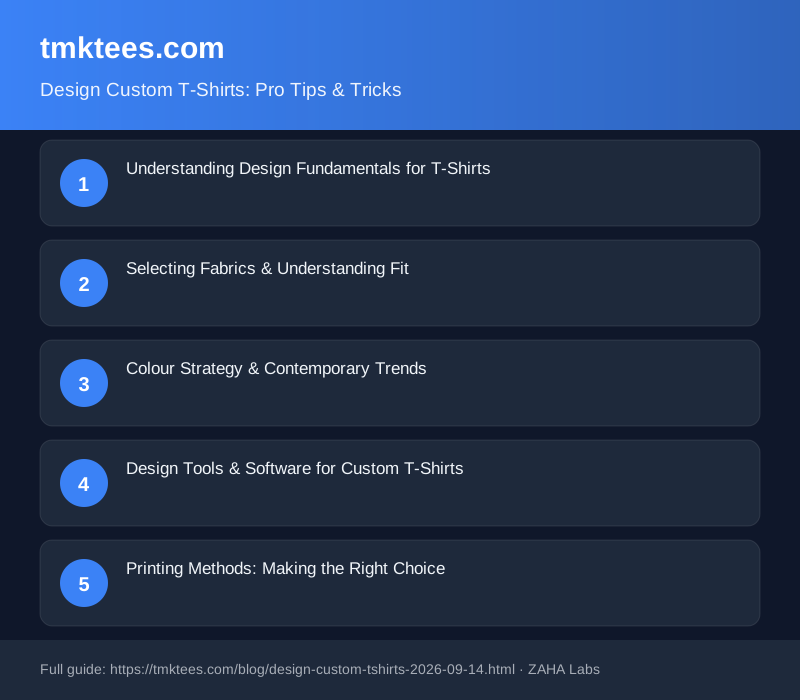
Understanding Design Fundamentals for T-Shirts
T-shirt design is distinctly different from poster art, illustrations, or logo work. Your design must work within physical constraints: the garment's shape, how fabric drapes on the body, and how the wearer will feel in the finished product. A stunning digital design can look awkward or uncomfortable on actual cloth if you haven't considered these factors.
Start by immersing yourself in your niche. If you're designing for skateboarders, study what successful skatewear brands actually print. If you're targeting gaming communities, look at what resonates there. Spend time on Instagram, TikTok, Depop, and Vinted—platforms where real people buy and sell custom t-shirts. Notice which designs generate genuine engagement, not just likes. The comments, shares, and repeat purchases matter far more than vanity metrics.
Your design concept should solve a problem or speak to an identity. The most successful custom tees either represent membership in a community, make a statement, or simply feel cool to wear. Avoid over-complicated messaging or graphics that look cluttered on fabric. Simplicity often wins.
Selecting Fabrics & Understanding Fit
The fabric is half the product. Premium custom t-shirts demand quality materials—100% combed cotton or carefully-selected blends are non-negotiable. Combed cotton is softer, more durable, and holds colours better than regular cotton. The difference is immediately noticeable when someone puts your tee on.
Look at GSM (grams per square metre) as your quality benchmark. Standard t-shirts sit around 150–160 GSM and feel thin. Quality blanks are 180–200 GSM—substantial, comfortable, and long-lasting. Premium options reach 210+ GSM but cost considerably more. Most successful brands settle on 190 GSM as the sweet spot.
Fit dramatically impacts appeal. Consider offering multiple silhouettes: classic regular fit, oversized, fitted, and perhaps a unisex drop-shoulder cut. Test your design across several fits before committing to bulk production. You might discover that your graphic looks stunning on an oversized fit but less effective on classic cut—this insight is valuable before you invest in inventory.
Colour Strategy & Contemporary Trends
Colour is psychology. Black and white remain safest for maximum market appeal, but don't retreat from bold choices if they align with your brand voice. In 2026, streetwear trends favour earthy tones (sage, camel, charcoal), vintage-washed effects, and unexpected pastels paired with minimalist graphics.
Think carefully about how your design interacts with garment colour. High-contrast white graphics on black tees are eye-catching but can read as aggressive or corporate depending on your design. Softer colour combinations—muted graphics on neutral blanks—often feel more sophisticated and elevated. Create several colourway variations of the same design. A single design across five colour options multiplies your market reach.
Use design inspiration tools like Pinterest and Colour Lovers, but always return to what your specific audience actually buys. Trends matter, but authenticity to your brand voice matters more.
Design Tools & Software for Custom T-Shirts
Professional results don't require professional software—though they certainly help. Canva Pro is genuinely excellent for beginners. Its t-shirt mockup templates, integrated asset library, and intuitive interface mean you can create competition-quality designs within hours of starting. It costs £10/month and requires no technical knowledge.
If you're investing more seriously, Affinity Designer costs £70 as a one-time purchase and offers professional-grade features without subscription fatigue. Adobe Creative Suite (Photoshop, Illustrator) remains the gold standard but requires an ongoing £50+/month subscription.
Whichever platform you choose, always work in high resolution (300 DPI minimum). Understand your printer's specific requirements before finalising artwork. Most print providers publish detailed design guidelines—follow them exactly. A thorough design brief from your printer prevents costly mistakes on your first production run.
Printing Methods: Making the Right Choice
Different printing techniques suit different design types and budgets. Screen printing is economical for large batches (100+ units) and produces vibrant colours that last years. It works brilliantly for bold, simple graphics but struggles with fine detail. Direct-to-Garment (DTG) printing handles photorealistic imagery and complex colour gradients beautifully. It's perfect for small batches (1–50 units) but costs more per garment. Heat transfer printing offers quick turnaround, requires minimal equipment, and works for detailed designs—ideal for testing concepts before committing to screen printing.
Each method has design requirements. Screen printing needs high-contrast artwork with separated colours. DTG accepts virtually any image quality. Heat transfer requires transparent or white background areas. Discuss your specific design with your printer before artwork is final. A reputable printer will flag technical issues that could compromise the final product.
Strategic Placement & Sizing
Where you place your graphic matters as much as the graphic itself. Chest placements are standard, but consider back prints for logos or larger artwork, sleeve graphics for smaller details, or subtle pocket embroidery for premium positioning. Most chest prints work best at 8–12 inches wide—large enough to see clearly but not so large they overwhelm the wearer.
Always account for necklines, armholes, shoulder seams, and side seams when positioning artwork. A design that dips awkwardly into an armhole or sits too close to the neck creates an uncomfortable wearing experience. Modern design platforms include accurate garment mockup tools—use them. Test your layout against actual placement multiple times before sending to print.
Pricing Custom T-Shirts for Profitability
Pricing strategy determines whether your custom t-shirt business survives or thrives. Calculate all costs: blank garment cost, printing expense, labour, packaging, and shipping. If your production cost is £7 per shirt, your retail price should sit between £14–21 for budget-to-mid-market positioning, or £25–35+ if you're positioning as premium.
Consider your brand positioning. Luxury streetwear brands justify £40+ price points through storytelling, design exclusivity, and brand heritage. Budget brands compete at £10–15 through volume and sharp marketing. Most sustainable independent brands settle in the £18–24 range—premium enough to cover quality and profit, accessible enough for impulse purchases.
FAQ
What's the best design software for someone starting out?
Canva Pro is unbeatable for beginners—it's intuitive, affordable at £10/month, and has excellent t-shirt mockup templates. You can create professional designs without any design background. If you're ready to invest more, Affinity Designer (£70 one-time) is brilliant for serious creators.
How can I test whether my design will actually sell before printing 100 units?
Use print-on-demand services to order small samples (often as few as 5–10 units). Test them with your actual audience. Share high-quality mockups on social media and track genuine interest through comments, saves, and DMs. Real feedback beats guessing every time.
Which printing method should I use for detailed, photorealistic designs?
Direct-to-Garment (DTG) printing is your best option for detailed imagery and complex colours. Screen printing requires simplified designs with separated colours. Heat transfer works well for moderately detailed designs and is excellent for small batches or testing.
What GSM fabric weight should I aim for?
190 GSM is the professional standard—it feels substantial, lasts longer than thinner fabrics, and justifies a premium price point. Anything below 170 GSM feels thin and cheap. Premium brands go to 210+ GSM, but this increases production cost significantly.
Is it legal to sell designs I didn't create myself?
No—you must own all artwork or have explicit written permission from the original creator. Always create original designs, commission artists, or properly license imagery. Selling unlicensed designs exposes you to copyright claims, cease-and-desist letters, and legal liability that can destroy your business.