DTG vs Screen Printing for Small T-Shirt Runs
Screen printing has dominated custom apparel since the 1960s, yet most small orders now cost less and look sharper a different way. For custom t-shirt orders under 25 pieces, direct-to-garment (DTG) printing beats screen printing on cost, turnaround, and design flexibility. Above 50 units, screen printing typically wins.
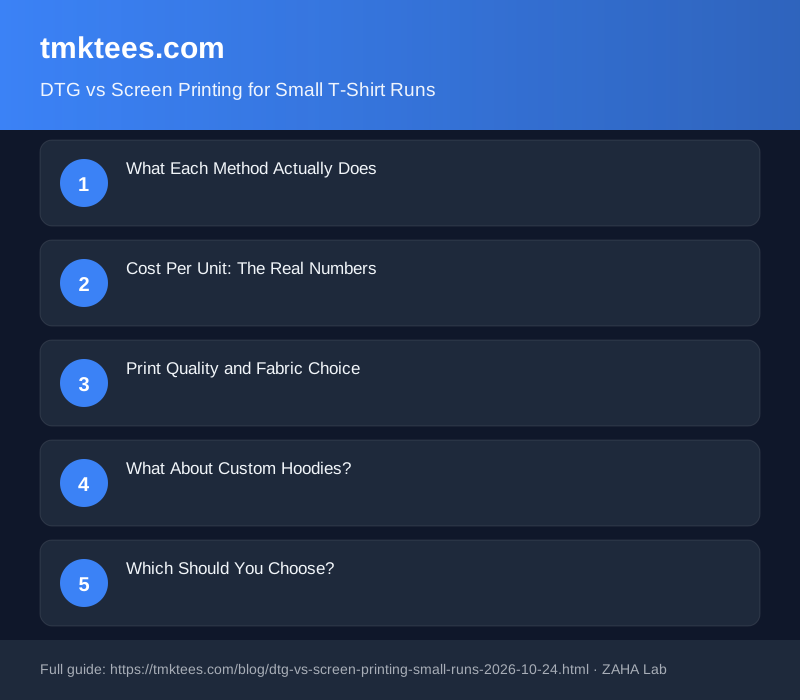
What Each Method Actually Does
Screen printing forces ink through a mesh stencil onto the fabric. Each colour needs its own screen, which means a setup charge per colour, typically £15 to £30 per screen. Get four colours in a design and setup alone can hit £80 before a single shirt is printed.
DTG works like a desktop inkjet printer. The garment sits flat on a platen and the print head deposits water-based ink directly into the cotton fibres. No screens. No minimum quantities. No waiting three days for stencils to cure.
Cost Per Unit: The Real Numbers
A single DTG print on a plain tee typically runs £8 to £14 all in, including the blank garment. Order ten, and the price per shirt barely shifts. Screen printing a five-colour design across ten shirts can cost £22 per unit once screen fees are divided out. Order 72 shirts with that same design and the per-unit cost often drops to £6 to £9. The crossover sits at roughly 30 to 40 pieces for most designs.
Print Quality and Fabric Choice
DTG ink bonds to cotton best. A 100% ring-spun cotton blank such as the Gildan 64000 Softstyle T-Shirt gives the sharpest detail and richest colour reproduction. Polyester blends can look washed out unless a pretreat spray is applied first. Screen printing handles synthetic fabrics more reliably, which matters for performance wear and streetwear with a high poly content.
For photographic artwork or artwork with gradients, DTG wins. Flat, vector-style logos with one or two spot colours are precisely what screen printing was designed for.
What About Custom Hoodies?
Both methods work on fleece. The Gildan 18500 Heavy Blend Hoodie is a go-to blank for custom streetwear printing: its 50/50 cotton-poly construction takes screen printing cleanly and responds well to pretreat DTG. Heavier garments add a little to print time and cost, but the result holds wash after wash.
Which Should You Choose?
Under 30 pieces with a complex, multi-colour design: go DTG. Over 50 pieces with a simple logo or block text: screen printing pays off. Between those numbers, ask for both quotes side by side. Most printers will run the comparison in under a minute. The Fruit of the Loom Valueweight T-Shirts multipack is a popular choice for test runs before committing to a full production order.
FAQ
What is DTG printing on t-shirts?
DTG stands for direct-to-garment. A specialist inkjet printer deposits water-based ink directly onto the fabric surface, producing photographic-quality prints with no screen setup fee and no minimum order quantity.
Is screen printing more durable than DTG?
Screen printing ink sits on top of the fibres and can outlast DTG prints when a garment is washed heavily, especially on dark fabric. A quality DTG print on 100% cotton, washed inside out on a cool cycle, will still look sharp after 40 or more washes.
What is the minimum order for screen printing?
Most UK printers require a minimum of 10 to 24 pieces per design so that screen setup costs are worth paying. Some charge a flat screen fee regardless of quantity, which makes the per-unit cost drop sharply as the order grows.
Can you DTG print on dark t-shirts?
Yes. Dark garments require a white base layer (underbase) first, which adds a pretreat step and slightly raises cost. Expect to pay roughly £1 to £3 more per shirt for dark-fabric DTG compared with light-fabric prints.
Which method suits a small streetwear brand better?
Small drops under 50 pieces tend to go DTG for speed and no-minimum flexibility. Brands scaling past 100 units per colourway almost always move to screen printing to reach retail-viable margins.