Screen Print vs DTG: Which Is Best for Custom Tees?
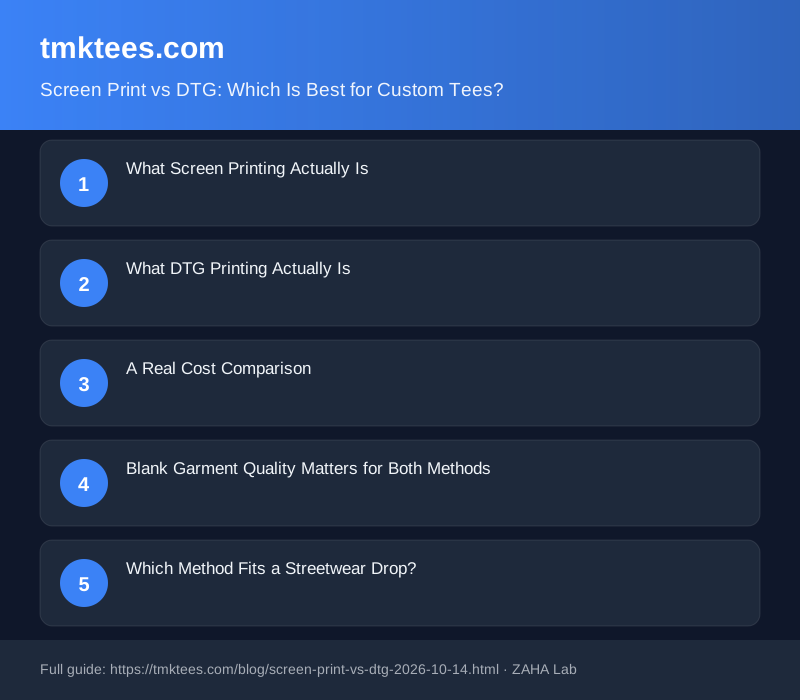
Most first-time buyers pick the wrong print method and end up paying 30-40% more per shirt than they had to. The decision comes before you upload a single file.
Custom t-shirt printing comes down to two main methods. Screen printing suits bulk orders of 24 or more shirts: setup costs are fixed, so the price per unit drops sharply as quantity rises. DTG (direct-to-garment) suits small runs, complex artwork, and one-offs with no minimum order required.
What Screen Printing Actually Is
Screen printing forces ink through a tightly stretched mesh stencil directly onto fabric. Each colour in a design requires its own screen. A two-colour chest logo uses two screens; a four-colour back print uses four. Setup costs run roughly £15-25 per screen in the UK, regardless of how many shirts you print.
That fixed setup cost is what shapes everything downstream. Spread across 12 shirts it bites. Spread across 200 shirts it almost disappears. UK printers quote screen work in quantity breaks, and the unit cost at 48 shirts is commonly 55-65% lower than at 6 shirts. Volume is the engine.
The finished print is built to last. Plastisol ink bonds into cotton fibres under heat and survives hundreds of washes without meaningful fading. Colours are bold and opaque. A black tee with a white screen-printed logo looks and feels premium in a way that is hard to replicate with other methods. That is why most UK streetwear brands default to screen printing for their core logo pieces.
The constraint is colour complexity. Gradients and photographic images either require halftone dot patterns or a large number of screens. Neither approach reproduces a photograph the way a home inkjet would. For a six-colour all-over graphic on a small initial run, screen printing will likely cost more than the alternative.
What DTG Printing Actually Is
DTG stands for direct-to-garment. The machine is effectively a modified inkjet printer. The garment lies flat on a platen, and the print head sprays water-based ink directly into the fabric fibres. No screens, no setup cost, no minimum quantity.
Because every shirt is printed individually, the unit cost barely changes whether you order 1 or 15. That makes DTG ideal for sample runs, personalised gifts, and small-batch drops where 10-20 pieces are all you need to test a concept. You can print each shirt with a different name or number for the same cost per unit.
Complex artwork is where DTG earns its place. A photograph with thousands of gradients, a hyper-detailed graphic, a design with dozens of colour transitions: all print faithfully because there is no screen to limit colour count. For that kind of artwork at low quantities, DTG is the only affordable option.
The downside is durability and substrate sensitivity. Water-based inks sit on top of fibres rather than fusing into them under pressure. Washing care matters more. On budget blanks without proper pre-treatment, a DTG print can show cracking after 30-40 washes. The method also depends heavily on fabric: 100% ringspun cotton absorbs ink cleanly, while polyester-heavy blends cause colour shift and poor adhesion.
A Real Cost Comparison
Take a concrete example: 50 black t-shirts, two-colour logo on the chest, small URL on the back.
| Factor | Screen Print | DTG |
|---|---|---|
| Setup cost | ~£60 (4 screens) | None |
| Cost per shirt at 50 units | ~£6.50 | ~£9.00 |
| Total for 50 shirts | ~£385 | ~£450 |
| Cost per shirt at 10 units | ~£14.00 | ~£9.00 |
At 50 units the screen method saves around £65. At 10 units it costs nearly £50 more. The crossover in most UK print shops sits between 20 and 30 shirts, shifting by colour count and complexity of artwork.
Blank Garment Quality Matters for Both Methods
Print quality is only as good as the garment underneath it. Thin, low-GSM blanks distort under screen printing platens and absorb DTG ink unevenly. Most UK printers recommend at least 180 GSM for screen work and 190 GSM for DTG.
The Gildan Heavy Cotton T-Shirt (180 GSM, 100% preshrunk cotton) is the standard blank used by screen printers across Britain. It takes plastisol ink cleanly, holds shape after repeat washing, and costs under £3 per unit when bought in packs of 12 or more. Pre-treat it correctly and it works with DTG too.
For hoodies, the Fruit of the Loom Classic Hooded Sweatshirt is a solid workhorse blank. The 80% cotton, 20% polyester blend hits 280 GSM and handles the heat and pressure of a screen printing platen without warping. At under £8 a unit in bulk, it keeps the total order cost manageable for a small capsule run.
Which Method Fits a Streetwear Drop?
Minimalist graphics, logo tees, and text-based designs on runs of 30 or more units belong on a screen printing press. The ink sits thicker, the colours read as more saturated, and buyers can feel the difference through the bag. That tactile quality signals production value without adding branding.
Complex, multicolour, or photorealistic graphics on initial runs under 20 units go to DTG. Print 12 pieces to test a colourway. If they sell in 48 hours, scale the reorder to 50 and shift to screen printing for the restocked version. That workflow costs a bit more at the test stage, but it avoids committing to screens for a design that does not land.
Some brands combine both within a single garment. The main logo is screen-printed for opacity and weight; a limited graphic on the back or sleeve is DTG for colour depth. The result looks unlike anything a single-method shop produces. It does raise unit cost, so it works best on a premium price tier.
If you are setting up a small in-house DTG rig, the Gildan Softstyle T-Shirt (150 GSM, 64/36 ringspun cotton-polyester) pre-treats well and delivers sharp colour on consumer-grade machines. The slightly smoother surface helps ink resolution compared to rougher open-end cotton blanks.
Quick Decision Guide
Go with screen printing when:
- Your order is 24 or more units
- The design uses 1-4 solid, flat colours
- Maximum wash durability is a priority
- You are printing on dark fabric and need full opacity
Go with DTG when:
- Your order is under 20 units
- The design includes gradients, photography, or more than 6 colours
- Each shirt needs a personalised detail (name, number, unique graphic)
- You are testing demand before committing to a larger run
Related Products
FAQ
How long does a screen print last compared to DTG?
A plastisol screen print on quality preshrunk cotton typically survives 100 or more washes before noticeable fading. DTG prints on properly pre-treated garments generally last 50-80 washes. Washing inside out on a cold, gentle cycle extends both significantly.
Can you screen print on polyester fabric?
Yes, but it is harder than printing on cotton. Polyester repels water-based inks and is prone to dye migration, where the fabric's own dye bleeds upward into the print layer. Most printers use a low-cure ink and a heat barrier for poly blends. Pure cotton delivers better results every time.
What is the minimum order for screen printing in the UK?
Most UK screen printers set a minimum of 12-24 units per design per colourway. Some will go as low as 6, but the fixed screen cost makes the per-shirt price uncompetitive below about 18-20 units. DTG has no practical minimum and many shops will print a single shirt.
Does DTG printing work on dark-coloured t-shirts?
It can, but dark garments require a white under-base layer printed before the main artwork. That adds cost and gives the print a slightly raised feel. Without an under-base, colours look washed out on black or navy fabric. Most UK printers charge 20-30% more for dark garments than for white or light ones.
Which method produces the softest print feel?
DTG prints are generally softer because the ink integrates into the weave rather than sitting on top of it. Discharge screen printing, which strips the fabric's own dye and replaces it with pigment, is equally soft and extremely durable, but it only works on 100% cotton. Standard plastisol screen prints feel slightly raised and firm, which many customers associate with a quality, professional finish.