Screen Printing vs DTG: Which Is Best for You?
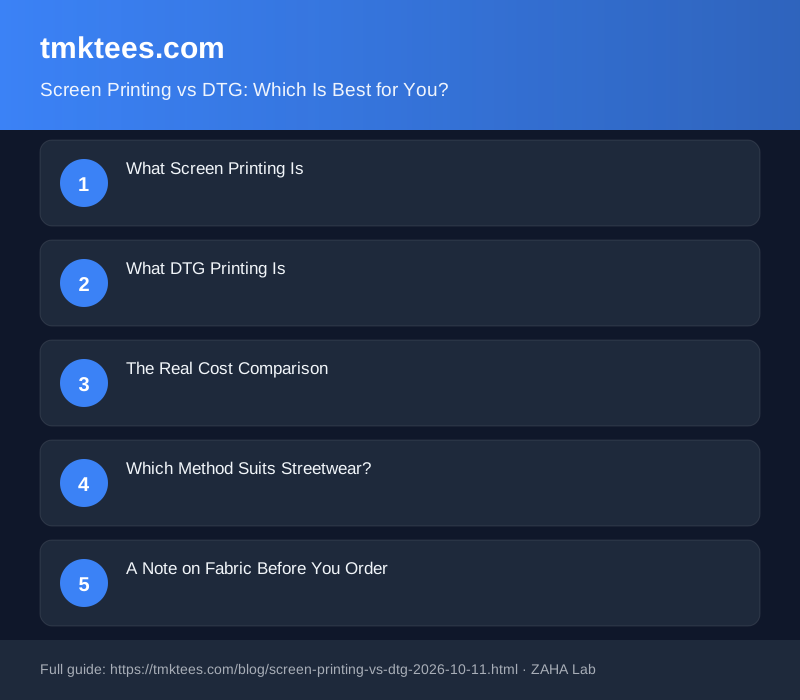
Screen printing still handles roughly 63% of all decorated apparel in the UK, yet most first-time buyers assume the digital option must be better. For orders above 24 garments with a bold graphic, screen printing consistently undercuts DTG on price and outlasts it through repeated washing.
The short answer: screen printing is the right choice for runs of 24 or more pieces with fewer than six solid colours. DTG printing wins for short runs, photographic detail, and single pieces. The rest of this guide covers the cost numbers, the fabric rules, and the specific scenarios where each method pulls ahead.
What Screen Printing Is
Screen printing forces ink through a finely woven mesh screen onto the fabric. Every colour in your design requires its own dedicated screen. Screens cost roughly £20–50 each to produce at most UK print shops, and that setup fee is the main upfront expense for any order.
Once the screens exist, every additional shirt costs only a few pence of ink and time. That economics model rewards volume decisively. At 50 units, a one-colour chest print on a quality blank typically lands at £5–8 per shirt. Add a second colour, pay for another screen, and the per-unit price barely shifts. Results are vivid: sharp edges, saturated colour, and a print that survives 100 washes without cracking when the ink is properly heat-cured.
The limits are real. Screen printing handles solid blocks of colour well. Gradients, photographic detail, and designs with more than six or seven colours become complicated, expensive, or both.
What DTG Printing Is
DTG (direct-to-garment) printing works like an industrial inkjet printer built for fabric. Load the garment, send the file, press print. No screens, no minimum order quantity, no setup fee.
That simplicity makes DTG ideal for one-offs, sample runs, and any design with fine detail, gradients, or photographic imagery. A 10-colour illustration costs the same to print as a 2-colour one. A single custom piece typically costs £15–25 at UK services.
The catch is that per-unit cost stays high regardless of quantity. Print 100 DTG shirts and the price per shirt drops a little, but it will not come close to a screen print's equivalent at that volume. DTG also performs best on 100% cotton. Polyester blends cause colour-shift, called dye migration, and dark garments require a white pre-treatment (underbase) layer before the main colour goes down. That adds marginally to both cost and print feel.
The Real Cost Comparison
Assume a two-colour design on a mid-weight cotton tee, with standard UK pricing:
| Quantity | Screen print (per shirt) | DTG (per shirt) |
|---|---|---|
| 1–10 | High setup cost (not practical) | £15–25 |
| 12–24 | £10–15 (inc. setup) | £14–20 |
| 50 | £5–8 | £12–18 |
| 100+ | £4–6 | £10–16 |
At 100 units, the saving screen printing offers over DTG can reach £600–£1,200 on a single run. For a small brand launching a first collection, that gap matters.
Which Method Suits Streetwear?
Streetwear graphics tend to be bold: chunky block lettering, solid shapes, high-contrast logos. That plays directly to screen printing's strengths. Most established streetwear labels screen print their staple pieces for exactly this reason. Bold iconography, single-colour drops, oversized text prints, screen wins every time on those.
Where DTG earns its place in streetwear is photo-real imagery: distressed textures, greyscale portraits, fine illustrated detail. A design that looks like a vintage photograph needs DTG, or it needs a screen count that makes screen printing prohibitively expensive at small runs.
The blank matters as much as the method. A heavy 200gsm ring-spun cotton tee, such as the Gildan Heavy Cotton 5000, holds ink from both processes cleanly, drapes well off the body, and is the default blank for hundreds of UK streetwear runs every week. Thinner or lower-grade fabrics make prints look cheap regardless of the printing technique used.
For hoodies, a cotton-rich fleece such as the Fruit of the Loom Classic Hooded Sweatshirt provides the weight and surface consistency that screen inks bond to reliably. The blank is the foundation; the print is only as good as the garment beneath it.
A Note on Fabric Before You Order
Both methods print best on 100% cotton. It absorbs ink evenly, washes without significant fade, and avoids the dye migration that polyester introduces into DTG results.
Ring-spun cotton at 180–200gsm is the standard for printed streetwear. Below 160gsm and the garment feels thin; the print may even show through to the inside of the tee. Above 220gsm and you are into workwear territory, still printable but with a noticeably stiffer hand and different drape.
If a particular fit or stretch requires a blend, keep polyester content below 35% for DTG and below 50% for screen printing. Higher than those thresholds, discuss the specifics with your printer before committing to a full run.
Errors Worth Avoiding Before You Place Your Order
Ordering a DTG sample, then switching to screen printing for the main run, is a common trap. The colours will not match exactly. Approve a screen print sample separately, or stay with one method across the entire production run.
Low-resolution artwork is the second issue. For DTG, 300 DPI at the actual print dimensions is the minimum. Screen printing accepts vector files (AI, EPS, SVG) at any resolution, but rasterised artwork still needs 300 DPI at print size.
Skipping the wash-care conversation is the third problem. Both methods benefit from cold-water washing, inside out, with no tumble drying on high heat. DTG prints are notably more vulnerable to warm-water washing than screen prints. Adding a care insert or neck label prevents customer complaints downstream and protects the brand reputation you are building.
Finally, do not skip the strike-off. A strike-off is a single pre-production sample from the actual press run, not a digital proof. It costs £10–20 and catches colour errors before 100 shirts come off the press with an uncorrectable problem.
FAQ
What is the minimum order quantity for screen printing in the UK?
Most UK printers require 12–24 units as a minimum. Some accept runs of 6–10 pieces but charge proportionally more for the screen setup. The cost per shirt drops substantially at 50 units and again at 100.
Can screen printing reproduce photographic images?
Not easily. A true photograph requires halftone separation across multiple screens, which adds cost and never quite matches the detail of a DTG print. For photo-real artwork, DTG or dye-sublimation is the more reliable choice.
Does DTG work on dark-coloured garments?
Yes, but dark garments need a white pre-treatment (underbase) layer applied before the colour inks go down. This adds slightly to the cost and gives the print a marginally raised feel compared to printing on white or light fabrics. Request a sample before committing to a full dark-garment run.
Which method produces more vibrant colours on white fabric?
Screen printing typically produces more saturated results on white cotton because plastisol inks sit on top of the fabric rather than soaking in. DTG is more accurate to the original artwork's colour profile but can appear slightly flatter at smaller print sizes or on finer detail.
How should I prepare my artwork file for submission?
For DTG, supply a PNG or TIFF at 300 DPI, sized to the actual print dimensions, with a transparent background. For screen printing, supply layered vector files (AI or EPS) with each colour on a separate layer and no gradients, unless you have specifically discussed simulated process printing with your printer beforehand.
Affiliate disclosure: some links on this page are affiliate links. TMK Tees may earn a small commission if you purchase through them, at no additional cost to you.