Screen Printing vs DTG: Which Saves You Money?
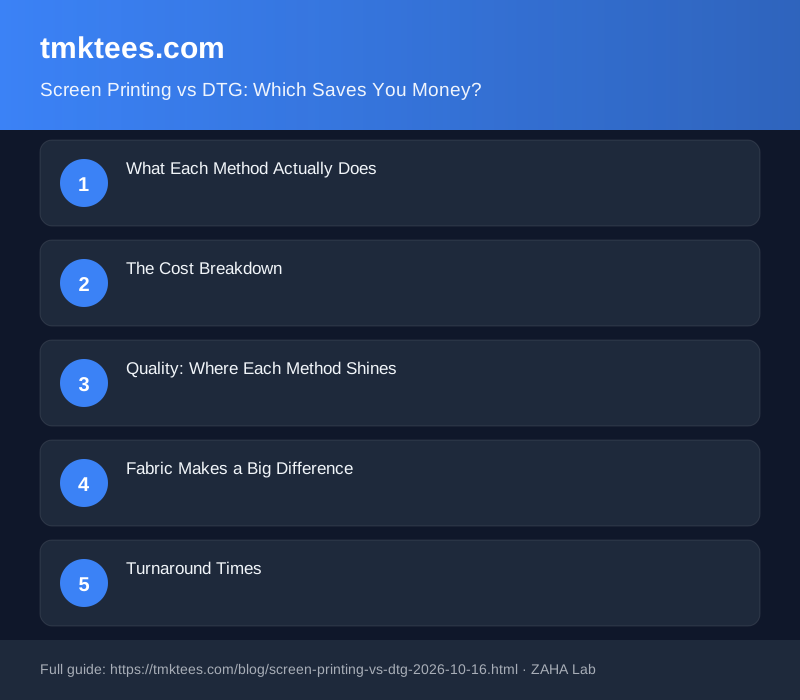
Roughly 40% of buyers ordering custom t-shirts for the first time pick the wrong print method and pay more than they should. The decision almost always comes down to one number: how many units you need.
What Each Method Actually Does
Screen printing pushes ink through a mesh stencil onto fabric. One screen per colour, prepared before a single shirt is printed. The inks bond deep into the fibres, surviving well over 100 washes without significant fading. Setup takes time and money upfront, but once the screens are made, the cost per shirt falls fast as quantities climb.
DTG works like a large-format inkjet printer aimed at a stretched garment. Modern machines such as the Kornit Atlas use water-based pigment inks that lock into cotton fibres during a heat-cure step. There is almost no setup cost. A single shirt costs the same to prepare as a batch of 20, which makes DTG ideal for small runs, samples, and on-demand fulfilment.
The Cost Breakdown
The figures below reflect typical UK trade prices in late 2026. Your exact numbers will vary depending on the printer, garment choice, and number of print locations. These assume a single front print with up to four colours for screen printing and full colour for DTG.
| Quantity | Screen print (4 colours) | DTG (full colour) |
|---|---|---|
| 1 | £28–45 | £12–18 |
| 12 | £14–18 | £9–12 |
| 24 | £9–11 | £8–10 |
| 50 | £5.50–7.50 | £7–9 |
| 100 | £4.50–5.50 | £6.50–8 |
| 250 | £3–4 | £5.50–7 |
The crossover sits at around 24 units. Below that threshold, DTG saves money almost every time. Above it, screen printing's per-shirt setup cost keeps shrinking as you add units, so the gap widens significantly by the time you reach 100 shirts.
Quality: Where Each Method Shines
Screen printing produces opaque, vivid colours with a slightly raised hand feel. White ink on a black Gildan Softstyle t-shirt looks punchy and graphic, which is exactly the quality most streetwear aesthetics depend on. The limitation is gradients. Each colour transition requires an extra screen and extra cost, so photographic artwork becomes expensive very quickly.
DTG handles gradients, photographic prints, and complex colour blends without any additional charge. A 12-colour design costs the same to print as a 2-colour one. The trade-off is brightness on dark garments. Printing on black or navy fabric requires a white ink underbase, which adds a few pence per unit and leaves a slightly softer feel compared to screen print ink.
Both methods can look exceptional on the right garment. Bold, limited-palette logos with sharp edges suit screen printing. Complex artwork or photographic merchandise suits DTG.
Fabric Makes a Big Difference
Both techniques work best on 100% ring-spun cotton. Polyester blends cause problems. DTG inks can dye-migrate on polyester fibres, shifting the print colour toward pink or grey after washing. Screen printing inks can crack on high-stretch fabrics over time. If you need activewear or garments with significant stretch, dye-sublimation is worth researching as a separate option.
A reliable blank for either method is the Gildan Heavy Blend Hoodie. Its 50/50 cotton-polyester mix takes screen-printed graphics cleanly, and its high cotton content holds DTG colour better than most poly-dominant fabrics. It is also competitively priced, which matters when calculating total cost per unit on a run.
Turnaround Times
DTG is faster for small orders. Many UK print shops produce 12 DTG shirts in 24 to 48 hours. Screen printing typically needs 5 to 10 working days, because screen preparation, printing, and curing each take time. That lead-time difference becomes significant if you are running a merch drop tied to a specific event date.
At scale, screen printing shops are highly efficient. A 500-unit screen print run might complete in 7 days; a comparable DTG run could take 10 to 14 days depending on machine capacity. For pre-ordered collections, neither timeline is usually a problem, provided the order is placed early enough.
Which Should You Choose?
Choose DTG if your order is under 24 units or your artwork uses gradients and more than four colours. Speed matters too: for a 48-hour rush on a small batch, DTG is the only practical option.
Choose screen printing when you are ordering 25 or more units with a 1 to 4 colour design. It is also the right call if you are building a collection you plan to reprint regularly, because screens can be stored and reused, cutting your setup cost on future runs to near zero.
Some brands use both methods at once. DTG covers samples and one-off custom orders; screen printing handles the main production run once a design proves demand. That split keeps early sampling costs low without sacrificing bulk-run margins.
A Note on Heat Transfer Vinyl
Heat transfer vinyl (HTV) is a third method worth knowing about. It suits single units, jersey names and numbers, and simple 1 to 2 colour designs. It does not scale past around 50 units economically, and durability over frequent washes is lower than screen print or DTG. For a brand testing a concept before committing to stock, pressing a design onto a heavyweight hoodie blank with HTV is a fast, low-risk way to photograph the product and test market response before the first proper production run.
Related Products
100% ring-spun cotton, popular blank for both DTG and screen printing
View on Amazon50/50 cotton-poly, takes screen-printed streetwear graphics cleanly
View on AmazonOversized fit for drop-based collections, works with HTV and screen print
View on AmazonFAQ
What is the minimum order quantity for screen printing in the UK?
Most UK screen printers require a minimum of 12 to 24 units per design. Some accept orders from 6 units for simple single-colour prints, but below 12 units the setup cost per shirt makes DTG a cheaper choice in almost every case.
Does DTG printing last as long as screen printing?
A well-cured DTG print on quality cotton holds up through roughly 50 to 80 washes before noticeable fading begins. A screen print on the same garment typically lasts 100 or more washes. Washing inside-out in cold water extends DTG print life considerably.
Can you print on dark t-shirts with DTG?
Yes, but the machine lays down a white ink underbase first to make the colours appear correctly. This adds a small cost and gives the printed area a slightly softer hand feel compared to screen printing on dark fabric. Results are still very good on quality cotton.
Is screen printing better for a streetwear brand?
For most established streetwear collections with bold, limited-palette logos, screen printing gives the opaque, tactile quality the aesthetic calls for. Start with DTG for your first 10 to 20 units to test demand, then switch to screen printing for reorders once a design proves it sells.
What happens if I add more colours to a screen print?
Each additional colour adds a new screen and, typically, an extra £30 to £60 to the setup fee. At low quantities, a 6-colour screen print can cost more per shirt than a full-colour DTG print of the same design. Above 100 units, the setup cost dilutes enough that screen printing still wins on price even with complex colour counts.
Affiliate disclosure: Some links in this post are Amazon UK affiliate links. TMK Tees may earn a small commission if you purchase through them, at no extra cost to you.