Custom T-Shirt Embroidery: When to Choose It
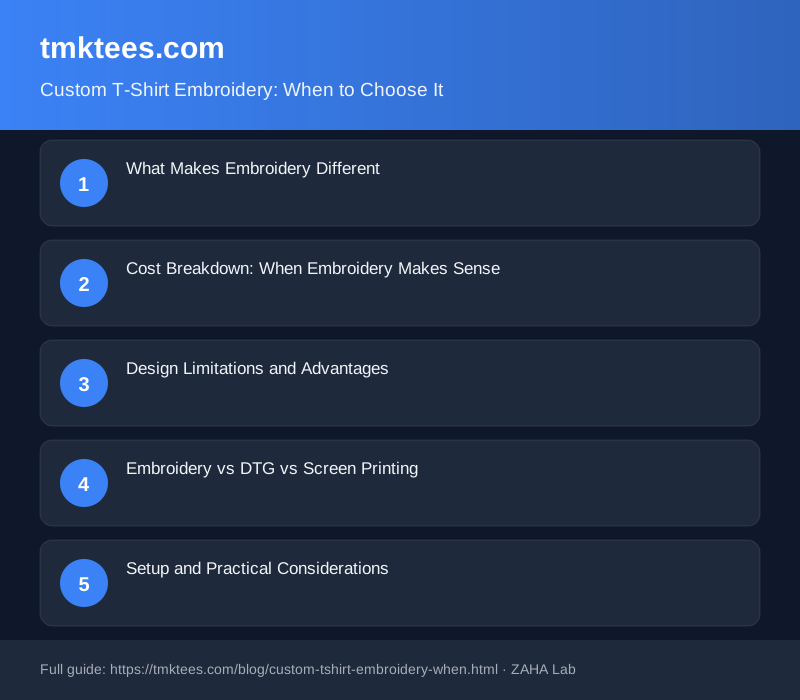
Embroidery creates 3D texture, durability, and a premium feel that screen printing cannot match, but costs two to three times more per unit and limits design complexity. Use embroidery for small logos, corporate branding, or limited runs where longevity and perceived quality matter most.
What Makes Embroidery Different
Embroidery uses thread stitched directly into fabric rather than ink applied to the surface. This fundamental difference changes everything about the final product. The stitched threads sit proud of the fabric, creating depth, texture, and a tactile quality that customers notice immediately when they touch the garment. A Brother embroidery machine or professional-grade equipment can produce consistent results for small runs of 10-500 units.
The durability advantage is substantial. Properly executed embroidery lasts through hundreds of washes without cracking, fading, or peeling. Screen-printed designs start degrading after 50-75 washes. For corporate uniforms, sports teams, or premium merchandise, embroidery holds its value across years of use.
Cost Breakdown: When Embroidery Makes Sense
Setup costs for embroidery are higher. Digitising artwork for embroidery costs £15-50 per design, compared to £5-15 for screen printing. Per-unit thread costs are roughly 50p-£1.50 depending on design size, stitch count, and thread type. Screen printing costs just 15-40p per shirt for standard inks.
At 100 units, embroidery might cost £50-70 per piece (including setup), whilst screen printing costs £8-15. For 500 units, embroidery drops to £12-25 per unit, making it competitive with premium screen printing. The break-even point depends on design complexity and colour count. Simple three-colour logos embroider cost-effectively at 250+ units; intricate multicolour designs need 500+ units to justify the investment.
Design Limitations and Advantages
Embroidery excels at solid logos, text, simple geometric shapes, and designs under 20,000 stitches (roughly 10cm × 10cm at standard density). Gradients, photographs, and fine details become impossible or look cheap when stitched. Screen printing handles photorealistic images easily; embroidery does not.
Thread selection offers creative possibilities screen printing lacks. Metallic thread, holographic thread, and specialty materials add visual interest. A quality embroidery thread set provides 100+ colours, giving designers real flexibility within embroidery's stylistic constraints.
Embroidery vs DTG vs Screen Printing
Direct-to-garment (DTG) printing offers photorealism but needs 50+ washes before the print degrades. Screen printing balances cost, durability (around 100 washes), and design complexity. Embroidery sacrifices flexibility for maximum durability and premium aesthetics.
Choose embroidery for corporate merchandise, premium streetwear, or brand ambassadors. Choose screen printing for graphic designs, large print areas, or cost-conscious runs. Choose DTG for one-off custom tees or photographic designs that only need a year or two of wear.
Setup and Practical Considerations
Professional embroidery requires either a managed service (£2-8 per shirt) or in-house equipment (£500-10,000 for entry-level machines). A consumer-grade embroidery machine handles small batches but needs learning. File preparation is critical: low-quality digitisation produces loose stitches and puckering. Partner with an experienced service if quality matters.
Thread tension, hoop stabiliser type, and fabric backing all influence results. Polyester thread on cotton shirts works well; cotton thread on synthetics tends to shred. Stabiliser costs add another 5-10p per shirt but prevent puckering and ensure crisp edges.
FAQ
How many washes will embroidered custom tees survive?
Properly executed embroidery lasts 300-500 washes without noticeable degradation. The thread itself outlasts most garments; stitches occasionally loosen only if tension was poor during production or stabiliser was inadequate.
Can you embroider on dark-coloured t-shirts?
Yes, embroidery works excellently on dark fabrics. Thread colour selection is easier than screen printing white ink on black. Metallic or contrasting thread colours pop beautifully against dark backgrounds.
What's the minimum order quantity for embroidery?
Professional services typically accept 10-unit minimums. At smaller quantities, the per-unit cost climbs because setup costs spread across fewer shirts. At 50+ units, pricing becomes competitive with screen printing.
Can I combine embroidery with screen printing on one shirt?
Absolutely. Many brands embroider a logo on the chest and add screen-printed graphics on the back. This combination maximises aesthetic options and durability where it matters most.
How do I care for embroidered custom tees?
Wash inside-out in cool water, gentle cycle. Turn-out protects stitches from abrasion with zips and other garments. Avoid fabric softener, which weakens thread bonding. Air-dry rather than machine-dry to extend thread lifespan.