Embroidery vs Printing for Custom Tees: Durability Guide
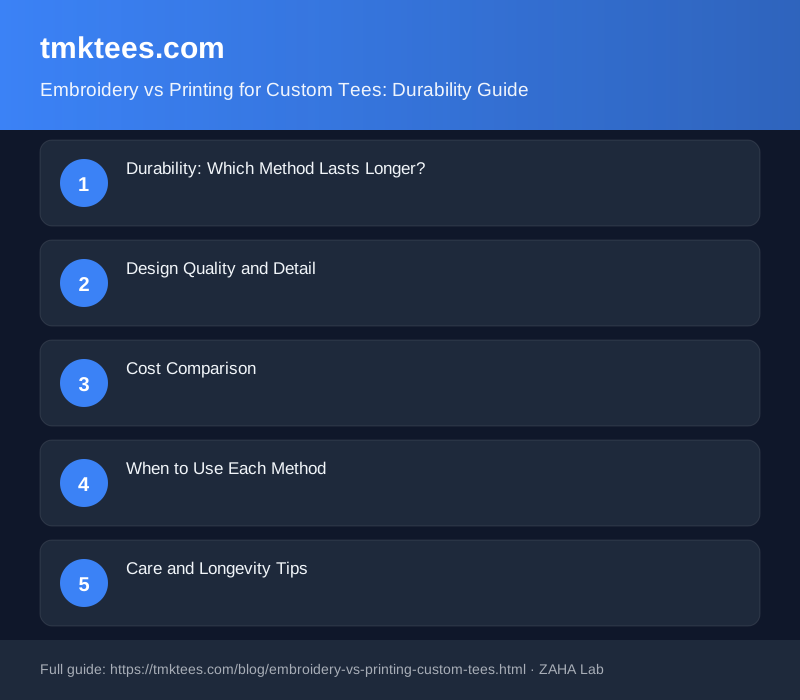
Embroidery and printing both transform plain tees into branded masterpieces, but they perform differently under stress. Embroidery typically outlasts printing by 3-5 washes; however, printing delivers superior photo-quality detail. Choosing between them depends on your design complexity, budget, and how long you need the garment to last.
Durability: Which Method Lasts Longer?
Embroidered designs can survive 50+ washing cycles without significant fading or wear, particularly when stitched onto heavy-weight fabrics. The thread locks into the weave mechanically, so durability isn't affected by sunlight or standard detergents. Screen-printed designs typically hold up for 25-40 washes before cracking at the edges; direct-to-garment (DTG) printing lasts 15-25 washes. Heat transfer prints fall somewhere between, lasting 20-30 cycles.
That said, washing method matters. Cold water and gentle cycles extend print life. A mesh laundry bag protects printed tees from friction damage during machine washing.
Design Quality and Detail
Printing excels at photorealistic images, gradients, and fine detail. DTG printing can reproduce full-colour photography with stunning accuracy. Embroidery handles solid logos and text beautifully but struggles with intricate gradients or small fonts. Text below 10mm height becomes difficult to read when embroidered.
Embroidery adds tactile dimension: customers can feel the raised thread, creating a premium impression. Printing lies flat against the fabric, offering a smoother aesthetic.
Cost Comparison
| Method | Setup Cost | Per-Unit Cost | Best For |
|---|---|---|---|
| Embroidery | £50-150 | £3-8 | Logos, text, small runs |
| Screen Printing | £30-80 | £1.50-4 | Solid colours, large runs |
| DTG Printing | £0 | £2-6 | Photos, complex designs, one-offs |
When to Use Each Method
Choose embroidery when: Your design is a solid logo or simple text, you're ordering 25+ units, and durability is critical (uniforms, work wear). The tactile quality justifies the per-unit cost.
Choose printing when: Your design includes photos, gradients, or intricate detail; you need a quick turnaround; or you're testing designs on small batches. Screen printing is unbeatable for large orders; DTG works for one-offs.
Care and Longevity Tips
Regardless of method, turn garments inside-out before washing, use cold water, and air-dry rather than tumble-drying. For embroidered pieces, avoid high-spin cycles that stress the stitching. For printed tees, stay away from bleach and fabric softener, which degrade both ink and cotton fibres.
FAQ
Can you embroider over a printed design?
Yes, though it's tricky. The printed area may crack under needle pressure. It works best if you embroider around the print rather than directly atop it.
Does embroidery damage delicate fabrics?
Heavy embroidery on lightweight cotton can pucker or tear. Lightweight designs and backing stabiliser help, but embroidery generally suits medium to heavyweight fabrics better than 100gsm tees.
Which method is cheaper for small orders?
DTG printing is cheapest for 1-10 units because there's no setup fee. Screen printing and embroidery only become cost-effective above 20-25 units.
Can embroidered designs fade in sunlight?
Thread fades far more slowly than ink. Quality polyester or cotton embroidery thread resists sun damage better than most screen prints, making embroidery ideal for outdoor wear.
Is DTG printing waterproof?
No. DTG ink sits on the fabric surface, so water exposure (swimming, rain) will cause mild fading over time. Screen-printed and embroidered designs handle moisture better.
Related Products
Gildan 64000 Unisex Softstyle T-Shirt: Heavyweight cotton ideal for both embroidery and screen printing.
Madeira Stabiliser Pack: Prevents puckering on lightweight fabrics when embroidering.
Mesh Laundry Wash Bag: Protects printed and embroidered designs during machine washing.