Best Printing Methods for Dark Coloured T-Shirts
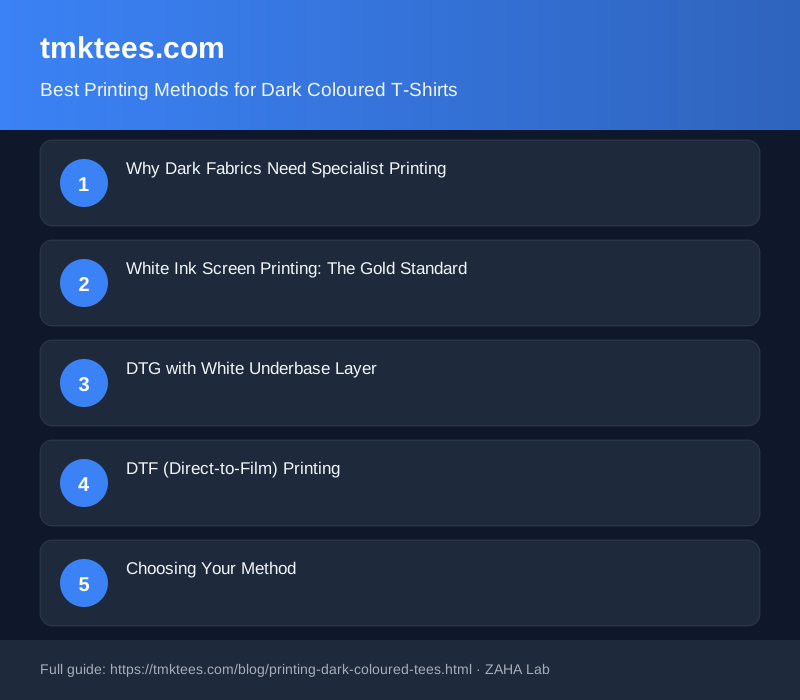
Printing on black and navy t-shirts requires a completely different approach than light fabrics. White ink screen printing remains the most reliable method, though digital alternatives like DTG and DTF offer faster turnarounds for small batches when done correctly.
Why Dark Fabrics Need Specialist Printing
Standard ink printing won't work on dark fabrics. Black and navy absorb standard coloured inks, making designs invisible or very dim. White ink solves this by providing contrast, but it demands precision during printing and curing. Temperature control matters more with dark garments because the fabric itself absorbs heat differently than light-coloured tees.
Professional printers know that rush orders on dark tees cost more because the process requires extra steps. A simple one-colour design on a white tee takes 5 minutes to print and flash cure. The same design on a black tee needs careful ink opacity management and longer curing times, sometimes doubling the labour involved.
White Ink Screen Printing: The Gold Standard
Screen printing with white ink is the most durable method for dark tees. Professional white ink sits heavily on the fabric, lasting 50 to 100 washes before visible fading occurs. This thickness gives white ink a slightly raised texture that customers often prefer on premium streetwear pieces.
The downside: white ink screen printing requires minimum orders of 12 to 24 units per colour per design. Setup costs run between £15 and £40 depending on your printer's pricing structure. For personal projects or small runs, this becomes expensive per unit.
White ink also limits design complexity. You are typically printing one to three colours per design because each colour needs its own screen. Photorealistic designs do not work well with traditional white ink printing.
DTG with White Underbase Layer
Direct-to-garment printers can print white ink directly onto dark fabric if equipped with white ink cartridges. The printer applies a white underbase first, then layers coloured inks on top. This approach handles photorealistic images better than screen printing.
DTG printing suits small batches of 1 to 10 units. There is no screen setup fee, so unit costs are more predictable. However, DTG white ink prints typically last 30 to 50 washes before noticeable fading because the ink layer is thinner than screen-printed white ink. The texture feels different too, sitting flatter against the fabric.
Quality varies significantly between DTG machines. Older models struggle with even white underbase application, leading to patchy or inconsistent results.
DTF (Direct-to-Film) Printing
DTF printing transfers designs from film onto fabric using heat and pressure. It works beautifully on dark tees without needing white ink layers underneath. Colours stay vibrant and last 40 to 70 washes.
DTF has lower setup costs than screen printing and no minimum order requirements. The process is faster than DTG for most designs. However, DTF transfers create a slightly plasticky feel compared to screen printing's natural integration with the fabric. Some customers dislike this texture, particularly on premium streetwear where softness matters.
Choosing Your Method
Pick screen printing if you are ordering 12 or more units of the same design and want maximum durability. Choose DTG if you need small batches with photorealistic detail. DTF works best when you want speed and low setup costs without caring about that slight transfer texture.
Test a small batch with your chosen method before committing to larger orders. Different printers produce noticeably different results even using the same printing technique.
Caring for Printed Dark Tees
Wash inside out in cold water to extend print life regardless of method. Avoid fabric softener, which breaks down ink adhesion. Dry on low heat or hang dry. These habits add 10 to 20 extra washes before noticeable fading.
FAQ
Can you print colours other than white on dark tees?
Screen printing typically uses white as a base because coloured inks will not show on dark fabric. DTG and DTF can print colours directly, but they still require white ink underneath for visibility. Most professional printers stick with white ink for dark tee work.
How many washes does a DTG design last on black tees?
DTG prints typically fade noticeably after 30 to 50 washes on dark fabric. Screen-printed white ink lasts 50 to 100 washes. Washing inside out in cold water adds 10 to 20 extra washes to either method.
What is the minimum order for screen printing dark tees?
Most screen printers require 12 to 24 units per design per colour. Some printers accept smaller runs of 6 to 12 units but charge higher per-unit costs. Check with your printer first about their specific minimums.
Can I print on navy or dark grey instead of black?
Yes, but navy and dark grey require slightly different white ink opacity settings than pure black. Navy absorbs less heat, so curing times might be shorter. Dark grey is easier to print on than black because it reflects more light.
Is DTF or screen printing better for custom streetwear?
Screen printing feels more premium because the design integrates naturally with the fabric. DTF prints have a slightly plasticky texture. For high-end streetwear, screen printing wins. For fast-turnaround custom pieces, DTF is more practical.