T-Shirt Fabric Guide: Quality & Best Materials
Most people grab a t-shirt without thinking twice about what it's made from. But the fabric you choose determines whether a shirt stays soft for years or stiffens after washing. For custom printing, the right material also ensures your design stays vibrant.
The best t-shirt fabric depends on your needs. For custom printing, 100% combed cotton (160-180 GSM) offers excellent print durability, whilst cotton-polyester blends (80/20 or 85/15) provide colour fastness and reduced shrinkage. Organic cotton suits eco-conscious brands.
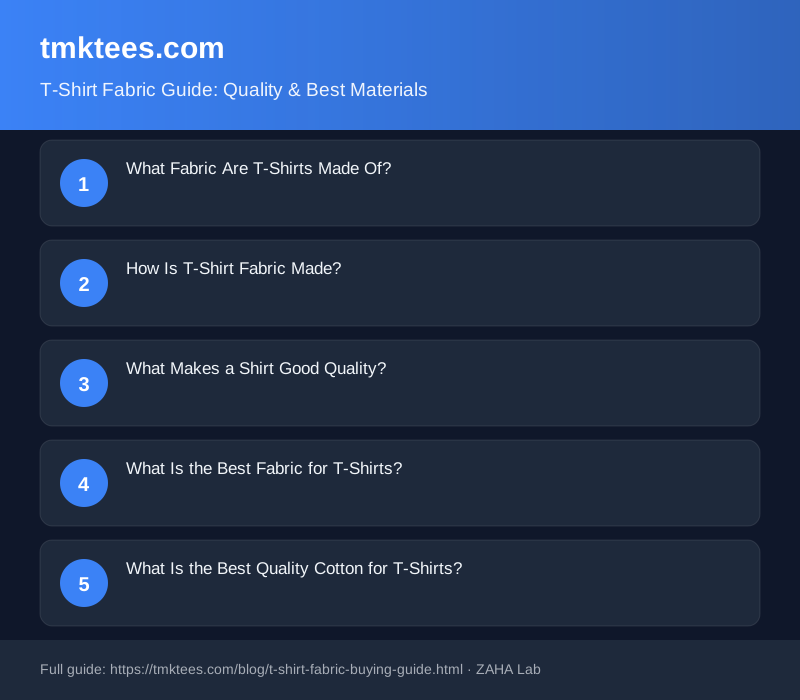
What Fabric Are T-Shirts Made Of?
Most t-shirts use cotton or cotton-polyester blends. Pure cotton t-shirts feel soft and breathe well but can shrink. Blended fabrics combine cotton's comfort with polyester's durability and colour-hold.
For custom printing, blends are often preferred because they resist fading better under industrial washing and printing processes. The specific blend ratio, typically 85% cotton/15% polyester or 80/20, affects both feel and longevity.
How Is T-Shirt Fabric Made?
T-shirt fabric begins with raw cotton, which is carded (combed to remove short fibres and debris), then spun into yarn. The yarn is knitted into fabric using a jersey knit construction, the standard for t-shirts. The fabric is then finished: pre-shrunk, dyed, and softened.
Pre-shrinking is crucial for custom apparel, as it prevents the shirt from shrinking dramatically after the first wash. Quality manufacturers pre-shrink to prevent more than 5% residual shrinkage.
What Makes a Shirt Good Quality?
Three factors define quality: GSM weight (how dense the fabric is), fibre length, and construction consistency. A quality t-shirt typically weighs 160-200 GSM and uses yarn spun from long-staple cotton fibres. The stitching should be straight and even, with no puckering or loose threads.
Combing during production removes short fibres, leaving only strong, long ones that resist pilling and last longer through repeated washing.
What Is the Best Fabric for T-Shirts?
Combed 100% cotton in 20s or 30s yarn count (which corresponds to 160-180 GSM) offers the best balance of comfort, durability, and printability. For maximum colour-hold with custom prints, an 85/15 cotton-polyester blend is ideal, it resists fading whilst remaining breathable.
Organic cotton is excellent for eco-conscious brands, though it requires careful handling to prevent shrinkage.
What Is the Best Quality Cotton for T-Shirts?
Pima cotton and combed cotton are the highest grades. Pima has naturally longer staple fibres (1 1/8 inches versus 7/8 inches for standard cotton), making yarn stronger and fabric softer. Combed cotton goes through an extra process that removes short fibres, leaving only long, strong ones.
Both resist pilling and degradation better than unprocessed cotton. When shopping for blanks, look for labels describing "combed" or "ring-spun" construction.
What Are Good Quality Shirts Made Of?
Premium t-shirts use 100% combed cotton, Pima cotton, or organic cotton. Some combine these with a small percentage of elastane (1-3%) for subtle stretch and shape retention. Blends designed for durability mix 85-90% cotton with polyester for colour-fastness.
The brand's textile supplier often determines quality more than fabric type alone, reputable mills maintain consistent standards across batches.
What Is the Best Fabric for a Shirt?
This depends on use. Casual wear prefers 100% cotton for comfort. Work or sports shirts benefit from cotton-polyester blends that resist wrinkles and shrinkage. Custom printed shirts do best with slightly heavier blends (175-200 GSM) to hold ink without cracking.
Consider the climate too: 100% cotton breathes better in heat; blends dry faster after washing.
How to Choose Shirt Fabric
Look for GSM weight (160-200 for t-shirts), fibre content on the label, and combing or Pima descriptions. Feel the fabric, it should be soft but not limp. For printing, choose slightly stiffer fabrics that hold ink without cracking.
If ordering custom blanks for printing, ask suppliers about pre-shrinking and thread quality. Request a sample swatch before bulk orders. This ensures your design looks as intended and the base shirt meets your standards.
Where to Buy High Quality Fabric for Clothing
For ready-made t-shirts, check established blank apparel suppliers such as Fruit of the Loom, Gildan, and B&C, which provide quality blanks in bulk. For raw fabric, contact textile wholesalers or distributors certified to relevant industry standards. Online suppliers often provide sample packs, use them to test before committing to large orders.
What Is the Best Quality Cotton for Shirts?
Egyptian and Pima cottons are considered superior, with longer staple fibres and naturally stronger yarn. Combed cotton, regardless of origin, outperforms unprocessed cotton because short fibres are removed, leaving only durable long fibres. Look for descriptions like "combed" or "ring-spun" on labels, these indicate quality processing.
FAQ
Does 100% cotton shrink more than blends?
Yes. 100% cotton can shrink 5-10% if not pre-shrunk; blends shrink 2-5%. Pre-shrinking during manufacturing reduces this significantly, though some residual shrinkage remains normal.
What's the difference between jersey knit and other t-shirt fabrics?
Jersey is the standard t-shirt weave, smooth on one side and slightly textured on the reverse. It's stretchy, breathable, and drapes well, the ideal construction for t-shirts and casual wear.
Can I print on 100% polyester t-shirts?
Polyester requires specialist inks and processes (usually sublimation or digital direct-to-garment). Screen printing works poorly on pure polyester because traditional inks don't adhere properly.
How many washes will a quality t-shirt last?
Quality cotton t-shirts last 50+ washes before noticeable wear. Turning them inside-out and washing in cold water extends lifespan considerably.
Is organic cotton worth the extra cost?
For eco-conscious brands or sensitive skin, yes. Organic avoids synthetic pesticides but requires careful care to prevent shrinkage and is slightly weaker than combed conventional cotton.
Sources
- ISO 1833-1:2017 - Textiles: Quantitative chemical analysis. Part 1: General principles of testing (International Organization for Standardization)
- BS 5651:2008 - Specification for man-made fibres and their identification (British Standards Institution)
- Textile Exchange Standards - Global certification standards for organic and recycled textiles
Related Products
Fruit of the Loom Heavyweight Tees
Premium 100% combed cotton blanks at 180 GSM. Perfect for custom screen printing and embroidery with excellent durability and minimal shrinkage.
View on Amazon UKGildan Ultra Cotton Blanks
Affordable 100% cotton t-shirts with pre-shrinking. Available in bulk, ideal for large custom orders and business printing.
View on Amazon UKHanes ComfortSoft Premium Selection
Cotton-polyester blend (90/10) offering superior colour retention for screen-printed designs. Mid-weight (170 GSM) and excellent for custom apparel.
View on Amazon UK