T-Shirt GSM Explained: Best Weight for Custom Printing
Half of all complaint prints come back for one reason: the wrong blank was used. Not the wrong method, not a bad file. The wrong fabric weight.
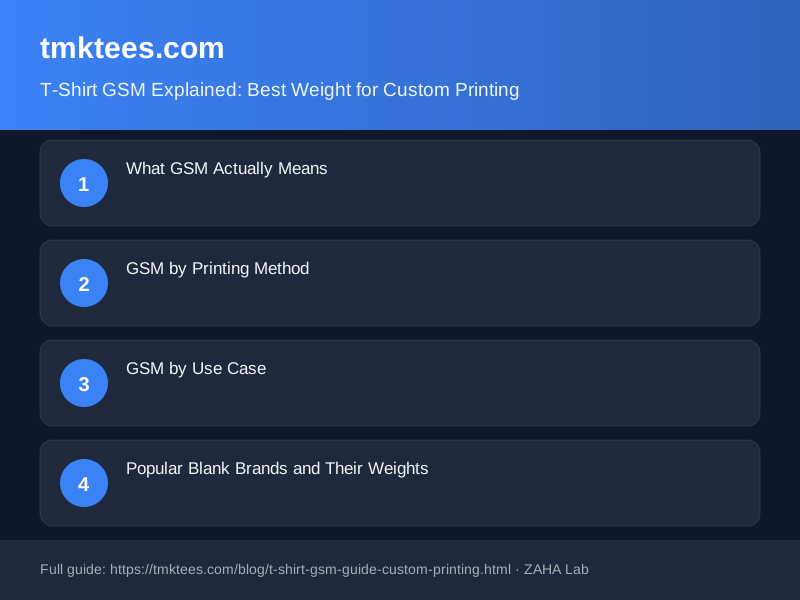
What GSM Actually Means
The number is literal. A square metre of 180gsm cotton weighs exactly 180 grams. Higher means a tighter, denser knit. A thin single-use promotional tee runs around 140-150gsm. A substantial streetwear-weight piece sits at 220-280gsm. Hold both fabrics and the difference registers in under a second.
GSM is printed on the inside neck label of most quality blanks. If it is not, the manufacturer's spec sheet will list it. Always check before ordering a print run, because switching blanks mid-project without checking weights is how you end up with inconsistent results across the same design.
GSM by Printing Method
DTG (Direct-to-Garment)
The pre-treatment spray that makes DTG ink bond needs a reasonably tight weave to grip. 180-200gsm gives the most reliable bond. The Gildan 5000 Heavy Cotton at 185gsm is the most screen-printed and DTG-printed blank in the UK by volume, for good reason. At 145gsm (like the Bella+Canvas 3001), saturation is still strong but light-shade garments can show ink show-through. Anything below 140gsm should skip DTG entirely.
Screen Printing
More tolerant of weight variation. 160g and above takes a crisp plastisol edge cleanly. Heavier blanks at 200g+ produce a marginally more vibrant wet-on-wet result, because the fabric does not flex under squeegee pressure mid-pass. It is a small difference, but noticeable on fine-line artwork.
Embroidery
Use 220g as a strict minimum. Anything lighter puckers around stitch boundaries, even with a standard tear-away backing. A Gildan 18500 Heavy Blend hoodie at 280gsm handles dense multi-colour embroidery without distortion. Thin tees and embroidery is a combination that generates returns.
Heat Transfer and DTF
The most forgiving group. DTF transfers bond well to 160g+ ringspun cotton and most polyester blends. If you are printing on a performance fabric, check for minimum polyester content (usually 50%+) rather than worrying about GSM.
GSM by Use Case
| Use Case | Target GSM | Reason |
|---|---|---|
| Promotional / festival tees | 150-180gsm | Keeps unit cost down; worn once or twice |
| Everyday branded streetwear | 180-200gsm | Survives 40-60 C washes; holds print over time |
| Premium limited-run drops | 220-280gsm | Hand-feel justifies a higher retail price point |
| Workwear and uniforms | 200g+ (or heavier if embroidered) | Daily wear; needs durability over softness |
Popular Blank Brands and Their Weights
The Gildan 5000 Heavy Cotton sits at 185gsm. Widely available, predictable shrinkage, and a proven surface for screen printing and DTG alike. The Bella+Canvas 3001 is 145gsm ringspun cotton: noticeably softer, retail-fit, better suited to DTG and direct-to-film when you want a hand-feel premium. Continental Clothing EP01 is 180gsm certified organic cotton and handles both screen printing and DTG cleanly. For custom streetwear hoodies, the AWD JH001 at 280gsm is the most common embroidery-ready blank in the UK trade market. Fruit of the Loom's Original T-Shirt runs at 165gsm, which keeps it on the lighter end but workable for screen printing and DTF.
One final point: GSM is consistent within a dye lot but can drift by 3-5gsm between manufacturing runs of the same blank. If you are printing 500 units across two deliveries, test a sample from each batch before committing the full run.
FAQ
What GSM is best for DTG printing on a white t-shirt?
180-200gsm gives the most consistent DTG result on white. The pre-treatment bonds more reliably to a tighter weave, and there is no risk of ink bleed-through. The Gildan 5000 (185gsm) is the safest starting point for most DTG printers.
Will a 150gsm t-shirt work for screen printing?
It will, but expect slightly less sharp edges on fine lines because a looser weave can flex under the squeegee. For bold, single-colour designs, 150gsm is fine. For anything with tight detail or halftones, go to 180g or above.
Does a heavier t-shirt always mean better print quality?
Not automatically. Very heavy fabrics (above 240gsm) can cause ink adhesion issues on flatbed DTG machines and are more expensive to pre-treat. The best print quality comes from matching the specific weight range to the method: 180-200gsm for DTG, 180g+ for screen print, 220g+ for embroidery.
What GSM is a standard Gildan t-shirt?
The Gildan 5000 Heavy Cotton is 185gsm. The Gildan 2000 Ultra Cotton is 203gsm. The Gildan 64000 Softstyle is 153gsm. The number varies significantly across the Gildan range, so always check the specific product spec rather than assuming all Gildan blanks share the same weight.
Can I use the same blank for both DTG and screen printing?
Yes. A 180-200gsm blank like the Gildan 5000 or Continental EP01 works well for both. The main adjustment is on the machine side: DTG needs pre-treatment regardless of blank weight, while screen printing does not. The fabric itself handles both methods at that weight range without issue.