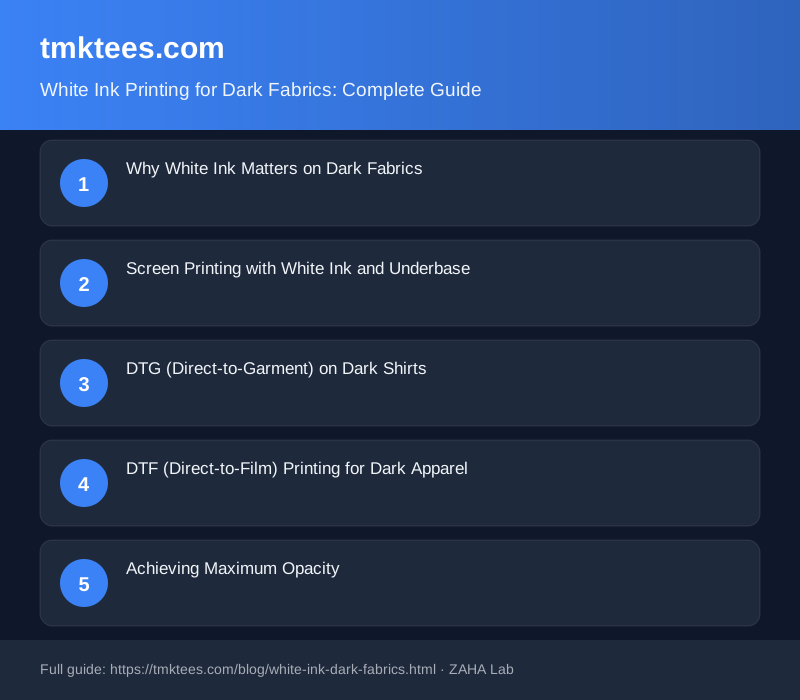
White Ink Printing for Dark Fabrics: Complete Guide
Dark t-shirts, hoodies, and streetwear make bold statements, but they create a printing challenge. Black absorbs colour, hiding ordinary inks completely. White ink and underbase layers solve this, creating vivid prints on dark fabrics that stay bright through dozens of washes.
White ink printing requires specific techniques and methods. Screen printing delivers the brightest results, but DTG and DTF technologies now offer competitive alternatives. The method you choose affects opacity, durability, cost, and final appearance. Understanding each approach helps you pick the right solution for your custom shirts and streetwear.
Why White Ink Matters on Dark Fabrics
Most inks sit translucently on fabric. On light shirts, this transparency doesn't matter. Pigments show through clearly. On dark shirts, light colours disappear into black or navy unless you use white as a base layer.
White ink acts as an opaque foundation. It covers the dark fabric completely, then you can print colours on top. Without white ink, any other colour applied to a black t-shirt simply blends in or appears muddy. Professional custom apparel on dark fabrics almost always uses white ink or discharge techniques to achieve clarity and brightness.
Screen Printing with White Ink and Underbase
Screen printing delivers the most control and brightness for white ink on dark garments. The process uses a multi-layer approach called underbase printing.
First, white ink is screened in a thick layer directly onto the dark fabric. This white underbase is then cured (flash dried) to set it without fully hardening. Next, colours are printed on top of the white foundation. Because the white layer already covers the dark fabric, the colour inks sit visibly on a white background rather than on black.
The result is the brightest, most durable print available. Plastisol white inks cure permanently, creating prints that last 50+ washes without cracking or fading. Thickness is adjustable, so you control exactly how opaque the underbase becomes. For streetwear and designs requiring maximum vibrancy, screen printing white ink is the professional standard.
DTG (Direct-to-Garment) on Dark Shirts
Direct-to-garment printers use modified inkjet technology to spray design directly onto fabric. On dark shirts, DTG systems still require white ink, but the approach differs from screen printing.
DTG printers deposit white ink in a fine spray pattern rather than a solid layer. The white coverage is lighter than screen printing, which means less opacity. Colours print immediately after, creating detailed prints with smooth colour transitions. However, the white layer remains thinner, sometimes requiring additional curing or thickening steps to achieve full coverage on very dark fabrics.
DTG excels at photographic detail and complex multi-colour designs. For simple logos on dark shirts, screen printing's thicker white layer produces better results. For intricate artwork on dark hoodies, DTG often provides the best aesthetic.
DTF (Direct-to-Film) Printing for Dark Apparel
Direct-to-film technology combines inkjet printing onto transfer film with heat-press application onto garments. DTF prints include white ink within the design, printed onto the film layer.
When transferred via heat press onto dark fabric, the white layer sits visibly on top. DTF delivers a middle ground between screen printing and DTG: the white layer is thick enough for good coverage, but thinner than screen-printed underbase. Prints last approximately 30-40 washes, making DTF suitable for mid-quality streetwear.
DTF works well for small to medium bulk orders and individual custom pieces. Setup costs are lower than screen printing, making it economical for limited editions and one-off designs.
Achieving Maximum Opacity
If your design includes very light colours, pastel shades, or thin lines on black fabric, opacity becomes critical. Screen printing with multiple white passes creates maximum coverage. Some printers apply 2-3 layers of white before adding colours, ensuring complete darkness coverage.
DTG can achieve similar results through printer software adjustments and multiple passes, though this increases cost and drying time. DTF brightness depends on the thickness of the transferred white layer, which is less adjustable than screen printing.
For the brightest possible prints on dark streetwear, screen printing with single or double white underbase remains the industry standard.
Screen Printing Ink Set
Professional-grade plastisol and white inks for dark fabric printing.
Shop InksFAQ
Does white ink coverage on dark fabrics ever fade?
Screen-printed white with plastisol inks resists fading for 50+ washes when properly cured. DTF and DTG prints fade slightly faster, typically lasting 30-40 washes depending on wash temperature and fabric care. Washing in cold water and turning garments inside-out extends all print lifespans significantly.
Can you print white ink directly on light-coloured fabrics?
Yes, but it serves no purpose. White ink on white or light-coloured fabric appears invisible or translucent. If you need opacity on light fabrics, use darker ink colours instead. White ink is exclusively beneficial on dark fabrics where it creates the foundation for visible colour printing.
How thick should a white underbase layer be?
A single screen pass creates moderate coverage. For maximum brightness and opacity on very dark fabrics, screen print 2-3 passes of white before adding colours. Each pass requires flash curing between layers to prevent ink bleeding. Thickness affects final stiffness, so balance opacity with wearability.
Is discharge printing an alternative to white ink on dark fabrics?
Discharge printing removes dye from coloured fabric rather than adding white ink. This technique works only on 100% cotton and creates extremely soft prints. Results appear lighter naturally without added white layer. Discharge is premium but requires compatible fabrics and inks, making it less common than white ink methods.
Which method offers the best value for bulk custom dark shirt orders?
Screen printing becomes most cost-effective above 50 units per design, as setup costs spread across many garments. DTF works best for 5-50 unit orders. DTG suits one-off or highly detailed designs. For large bulk streetwear runs, screen printing with white underbase delivers the best price per shirt and premium quality.